

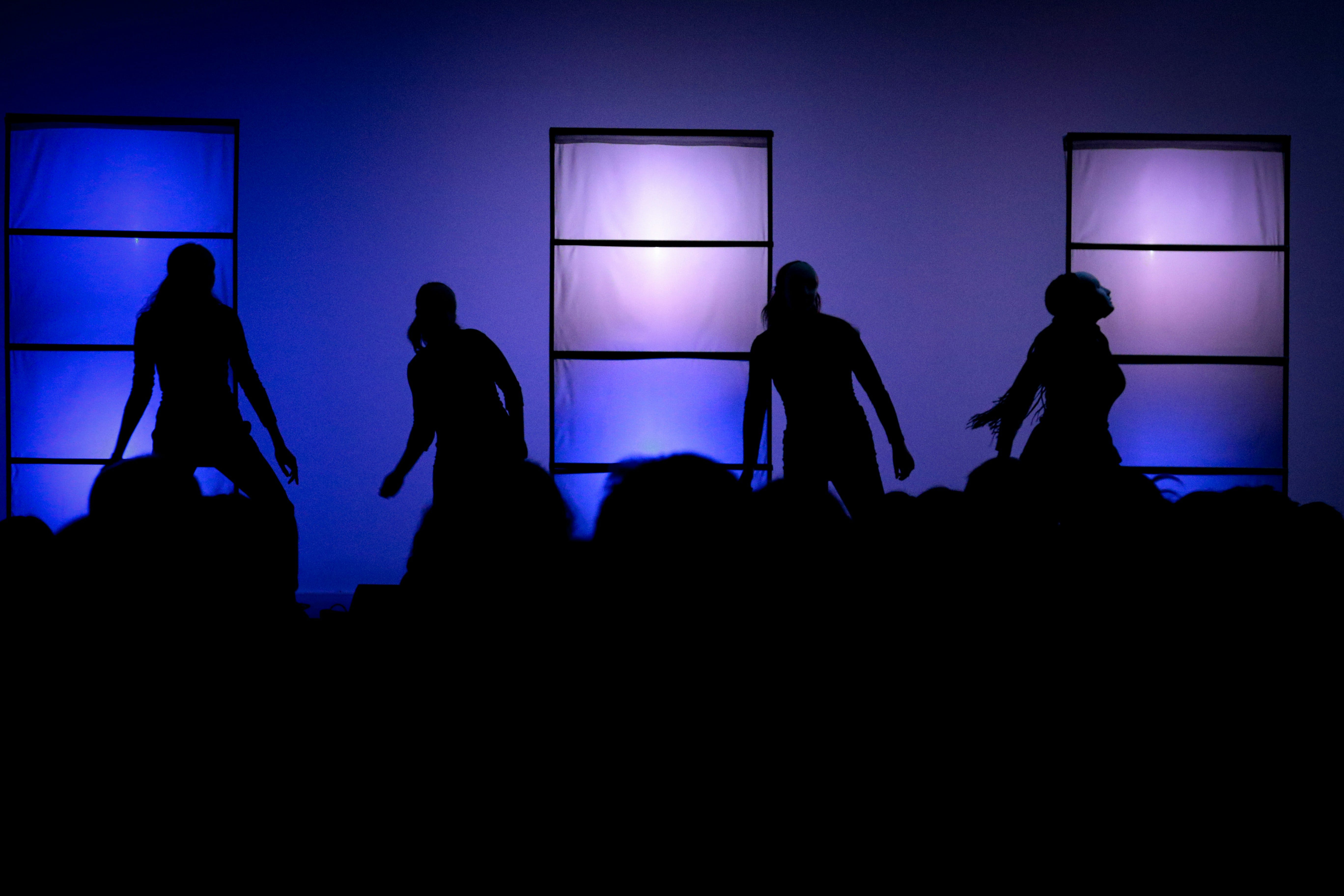
In every choreography harmony is not born of numbers, but of intent. Whether a single dancer moves in solitude or a hundred glide across the stage, the essence of choreography lies in the invisible thread that binds rhythm, movement, and purpose. Scale does not define the outcome. A duet can echo with the same emotional gravity as an ensemble, provided each gesture serves its purpose.
Harmony, in this sense, becomes the equilibrium between precision, expression and discipline. It is the point where the dancers’ individuality dissolves into collective coherence, where the choreography transcends coordination to become communion.
A choreographer’s true pursuit is not magnitude but alignment. The end goal is not to fill the stage, but to fill the moment! To turn time, motion, and intention into a collective breath. For when harmony is achieved the stage, no matter its size, becomes infinite.
Corporate vs Startup Culture
The contrast between startup and corporate cultures is often painted as agility versus structure, creativity versus protocol, passion versus process. Yet this is a false dichotomy. The startup, with its frenetic energy and fluid hierarchies, thrives on motion: ideas emerging raw, unfiltered, evolving in real time. The corporation, by contrast, consists of systems. Each process honed to preserve consistency, each decision guided by precedent. One dances to improvisation, the other to choreography. But both are, in essence, searching for harmony: that elusive alignment between people, purpose, and performance.
Where startups risk chaos, corporations risk inertia. One may falter from exuberance, the other from complacency. Yet within this tension lies the possibility of synthesis. A mature startup aspires, eventually, to the operational elegance of a corporation. A wise corporation rediscovers, cyclically, the restless spirit of the startup to remain alive. The most antifragile organizations are those that understand when to lead with rhythm and when to lead with structure. When to let the dancers find the beat, and when to steady the tempo.
Thus, startup and corporate are not opposing forces but complementary movements within the same choreography of innovation. The scale of the team, like the size of a stage, does not determine the grace of the performance. What matters is coherence. A shared rhythm that allows invention and discipline to coexist. In the end, both cultures are striving toward the same goal: a harmony of purpose where creativity finds its frame and structure finds its soul.
The Cathedral + The Bazaar!
In The Cathedral and the Bazaar, Eric S. Raymond illuminated a profound tension in how creation unfolds: the cathedral, meticulously designed behind closed doors, versus the bazaar, alive with open exchange and constant iteration. The true difference, he observed, was not structure but visibility. In the cathedral model of closed-source development, the process is veiled. The work of a few, revealed only when complete. The bazaar, by contrast, thrives in the sunlight of participation: transparency becomes both a mechanism of quality and a philosophy of trust.
In the context of modern organisations, this distinction resonates far beyond software. Traditional corporate cultures often mirror the cathedral. Teams working in isolation, information flowing upward rather than outward. Startups, meanwhile, embody the bazaar’s ethos: porous boundaries, open dialogue, and collective sense-making. Yet the emergence of inner source transforms this binary. By opening the code within an organisation, making it visible to all regardless of team or department, the cathedral’s walls dissolve without sacrificing its architectural coherence. Visibility no longer threatens control; it enhances alignment.
In such an environment, harmony is no longer the privilege of small, agile teams. When code, ideas, and intent are shared across an organisation, silos fade into choreography, movement coordinated not by hierarchy, but by shared rhythm. Inner source, then, becomes a synthesis where the stability of the cathedral meets the openness of the bazaar. In this convergence, visibility is not a risk to be managed, but the very light that allows collaboration, trust, and creativity to flourish in unison.
Waterfall & Agile is the new Yin & Yang
As organisations evolve, they often traverse the same bridge that connects Raymond’s cathedral and bazaar. In the early days of a startup, energy resembles the bazaar: a cacophony of ideas, swift decisions, and porous hierarchies. Everyone sees the work unfolding. Visibility is total, ownership is collective, and mistakes are treated as steps in the dance rather than flaws in the score. Yet, as the organisation grows, the very chaos that once fuelled innovation begins to strain its rhythm. Processes solidify, structures emerge, and a cathedral slowly rises from the noise. The challenge is to preserve the vibrancy of the bazaar within the quiet discipline of the cathedral. To maintain harmony as the stage expands.
A similar philosophy underpins the evolution from pure Agile or pure Waterfall to a hybrid approach. Waterfall, like the cathedral, is deliberate: a design drawn in advance, its beauty found in precision and predictability. Agile, like the bazaar, is fluid: it values learning in motion, discovery through iteration. Each has its virtue, but also its constraint. When combined (carefully, consciously) they can form a methodology that acknowledges both the need for foresight and the inevitability of change. The hybrid Agile–Waterfall model, then, becomes an architectural metaphor for organisational maturity: the scaffolding of the cathedral supporting the improvisation of the bazaar.
For startups in transition, this hybridisation is not just methodological but existential. Scaling brings weight: more people, more dependencies, more voices. To sustain innovation at scale, an organisation must manage its dual identity. The restless spirit of a startup and the composure of a corporation. The hybrid model allows that synthesis. Agile frameworks empower teams to adapt locally, respond to users, and innovate at the edges. Waterfall structures coordinate the larger machinery, aligning delivery, compliance, and governance. It is a system that learns as it plans but also plans as it learns.
Ultimately, hybrid project management embodies the same principle that unites choreography, architecture, and open collaboration: harmony through visibility and balance. It accepts that growth need not mean abandoning agility, nor that discipline must suppress creativity. A truly evolving organisation does not choose between cathedral and bazaar, or between Waterfall and Agile. It learns to dance between them. In this sense, the organisation finds its enduring rhythm: structure with transparency, purpose with adaptability, and innovation sustained by design.
References
Zaleski M. Traversing Hybrid Project Management: The Bridge Between Agile and Waterfall. Toptal. Published 2025. Accessed November 14, 2025. https://www.toptal.com/project-managers/agile/hybrid-project-management-a-middle-ground-between-agile-and-waterfall
Harvard Business School Online. Startup vs. Corporate Culture: What’s the Difference? Published August 31, 2023. Accessed November 14, 2025. https://online.hbs.edu/blog/post/startup-vs-corporate-culture
Devologyx. Startup Culture Versus Corporate Culture: Which Is Best for You? Published 2024. Accessed November 14, 2025. https://devologyx.io/startup-culture-versus-corporate-culture-which-is-best-for-you/
Founders Network. Startup vs. Big Company: Which Is Right for You? Published 2024. Accessed November 14, 2025. https://foundersnetwork.com/startup-vs-big-company/
Raymond ES. The Cathedral and the Bazaar. Published 2000. Accessed November 14, 2025. http://www.catb.org/~esr/writings/cathedral-bazaar/